CARA / Case study
CARA: turning a film archive into a place
An authored, scroll-controlled website for Hayden Hewitt’s psychological horror feature. Film fragments become a three-dimensional archive before the experience resolves into a practical film hub.
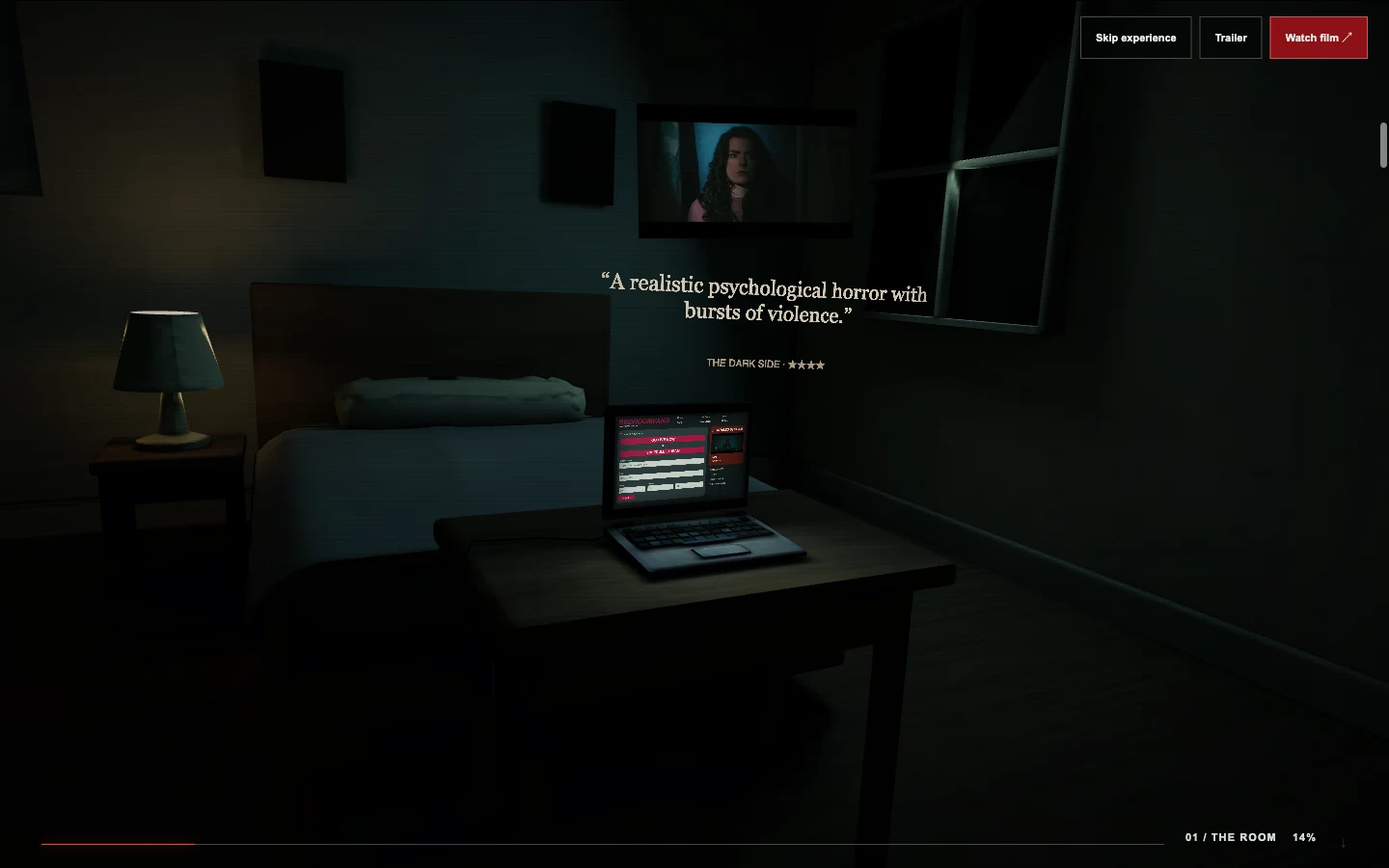
An experience shaped by the film
The central idea is a room that Cara is trying to escape. Film frames, performances and production textures supply the visual material. Frames drift as evidence, chains cross the camera, and the palette moves from unstable cyan-black space towards amber control.
The unusual behaviour follows the film’s identity. The website is part of its presentation, with a specific narrative progression rather than a general-purpose portfolio treatment.
The technical choices
The site is built with HTML, CSS and plain JavaScript. Its custom rendering code uses WebGL and WebGL2 directly, with shaders that create image depth and draw the three-dimensional rooms. Canvas 2D supplies additional graphics and animation.
Scroll controls the camera journey, film footage and transitions. HTML5 video and specially prepared all-keyframe clips let the film move with the visitor’s progress through the story.
The rooms were modelled in Blender, with lighting baked into texture atlases before export. This gives the spaces their atmosphere while reducing the lighting work needed in the browser. The Web Audio API supplies interactive sound effects.
An early prototype used Three.js and Vite. The current site uses browser APIs directly and does not depend on Three.js, React or a content management system.
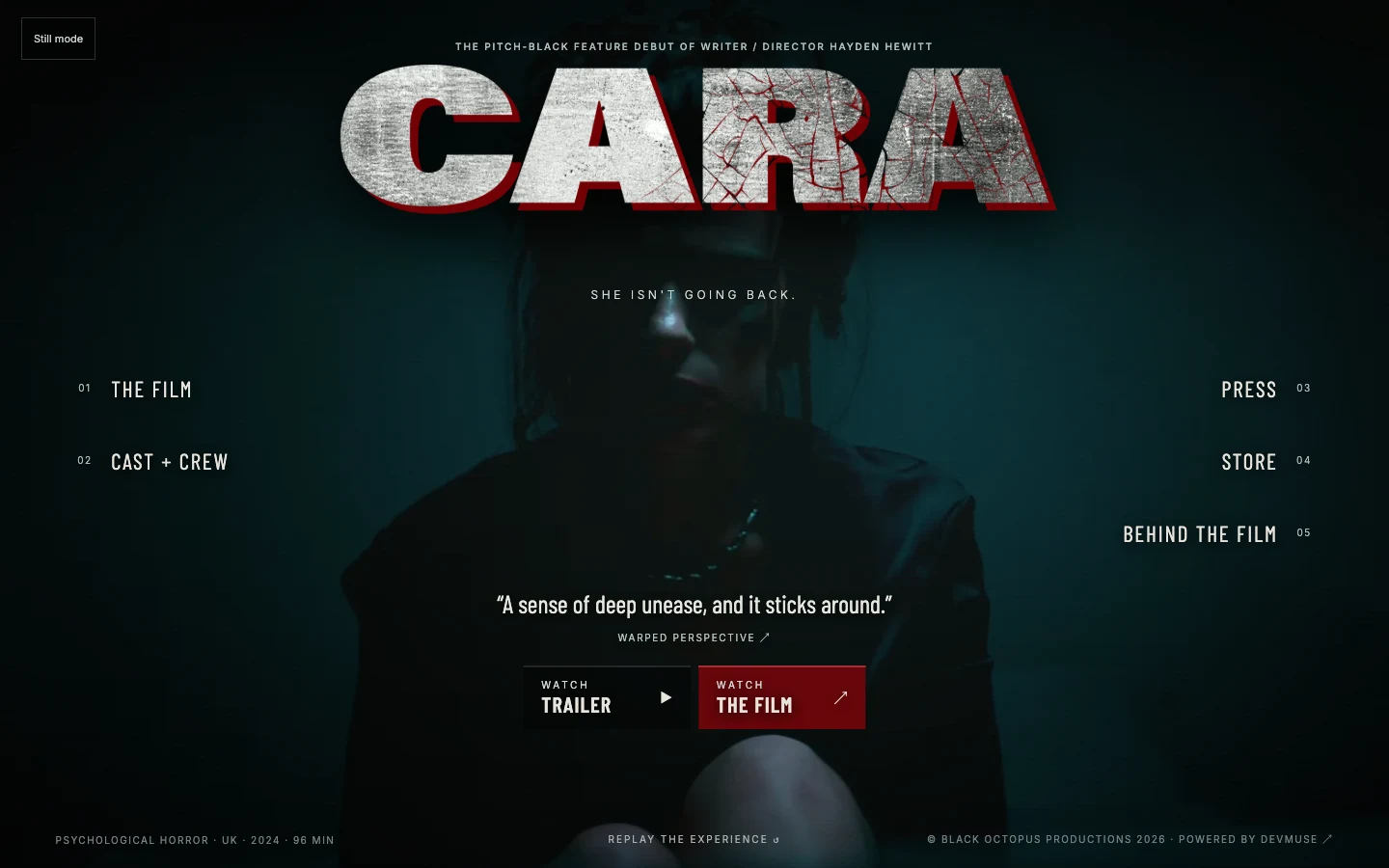
Reduced-motion support, a persistent still mode and direct routes to the film hub let visitors reach the useful information at their own pace. The hub also provides keyboard navigation, managed dialog focus and an Escape-to-close action.
A practical destination
The final hub brings together the trailer, watch options, synopsis, press, credits and merchandise. The spectacle has a destination: helping the visitor choose what to explore next.
What this demonstrates
CARA demonstrates concept, visual direction and interactive implementation carried through as one piece of work. It is a project associated with the studio founder’s own film, rather than an independent client endorsement.
For a film, creative organisation or distinctive brand, DevMuse can explore an experience with its own visual language while keeping its practical purpose clear.